What is a Restaurant Management System? The Ultimate 2026 Guide
If you are running a food business today, a simple cash register won't cut it. To survive and thrive, you need a comprehensive Restaurant Management System (RMS). But what exactly is an RMS, and how does it differ from a standard Restaurant POS?
Restaurant POS vs. Restaurant Management System
A traditional Restaurant POS primarily handles transactions: taking orders and processing payments.
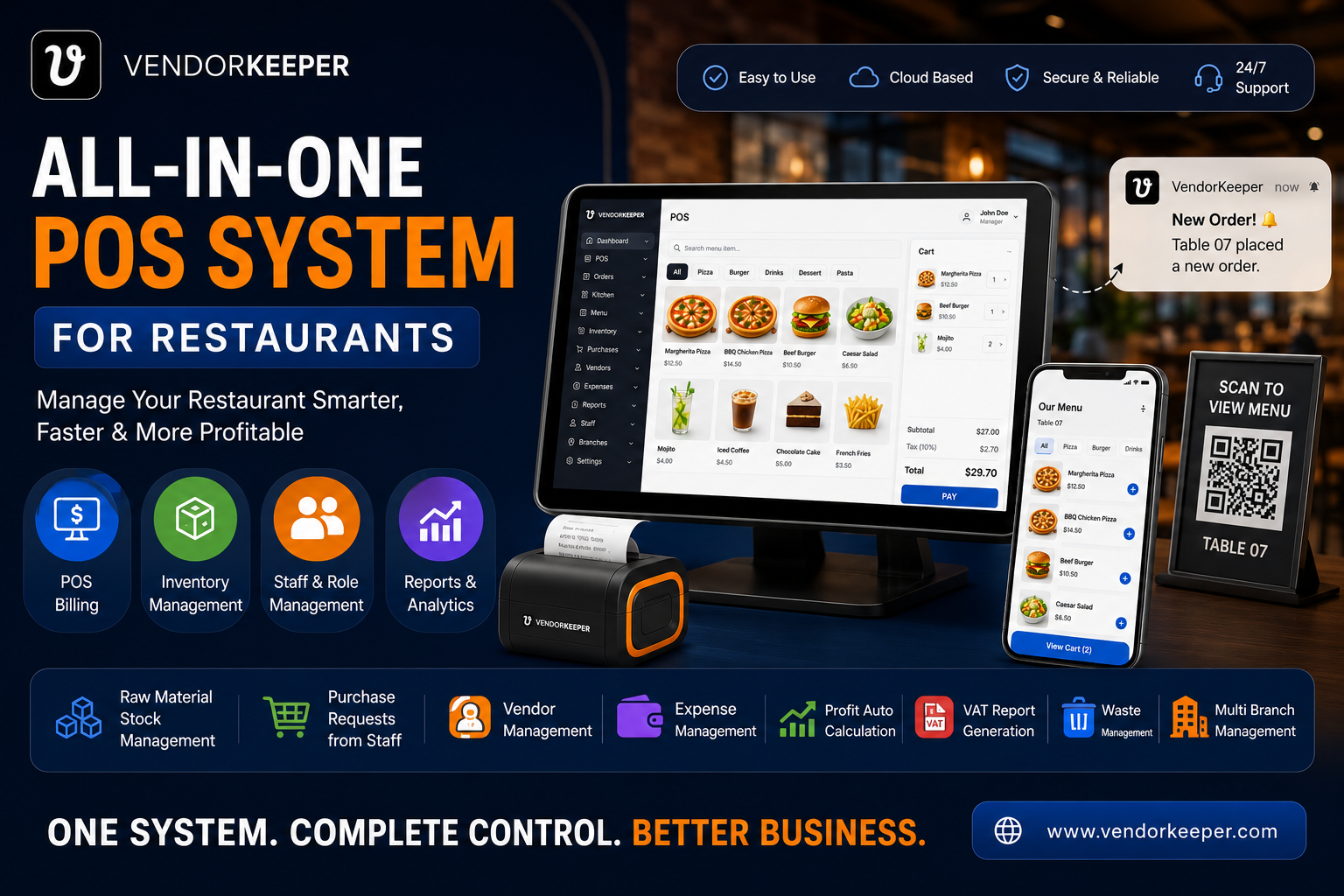
A Restaurant Management System, on the other hand, encompasses the POS but adds critical back-office functions. It is the central nervous system of your restaurant.
Core Components of a Modern RMS:
- Point of Sale (POS): The front-end interface for staff.
- Inventory Management: Tracking raw materials, recipe costing, and supplier purchase orders.
- Table Management: Floor plans, reservations, and waitlist management.
- Staff Management: Time tracking, scheduling, and payroll integration.
- Customer Relationship Management (CRM): Loyalty programs and customer data.
- Analytics & Reporting: Real-time dashboards showing profit, loss, and trends.
Why You Need an RMS in 2026
The margins in the restaurant industry are notoriously tight. An RMS like VendorKeeper automates tedious tasks, prevents inventory shrinkage, and provides the data you need to engineer a more profitable menu.
By upgrading to a full-fledged Restaurant Management System, you move from just "running" your restaurant to actively "growing" it.