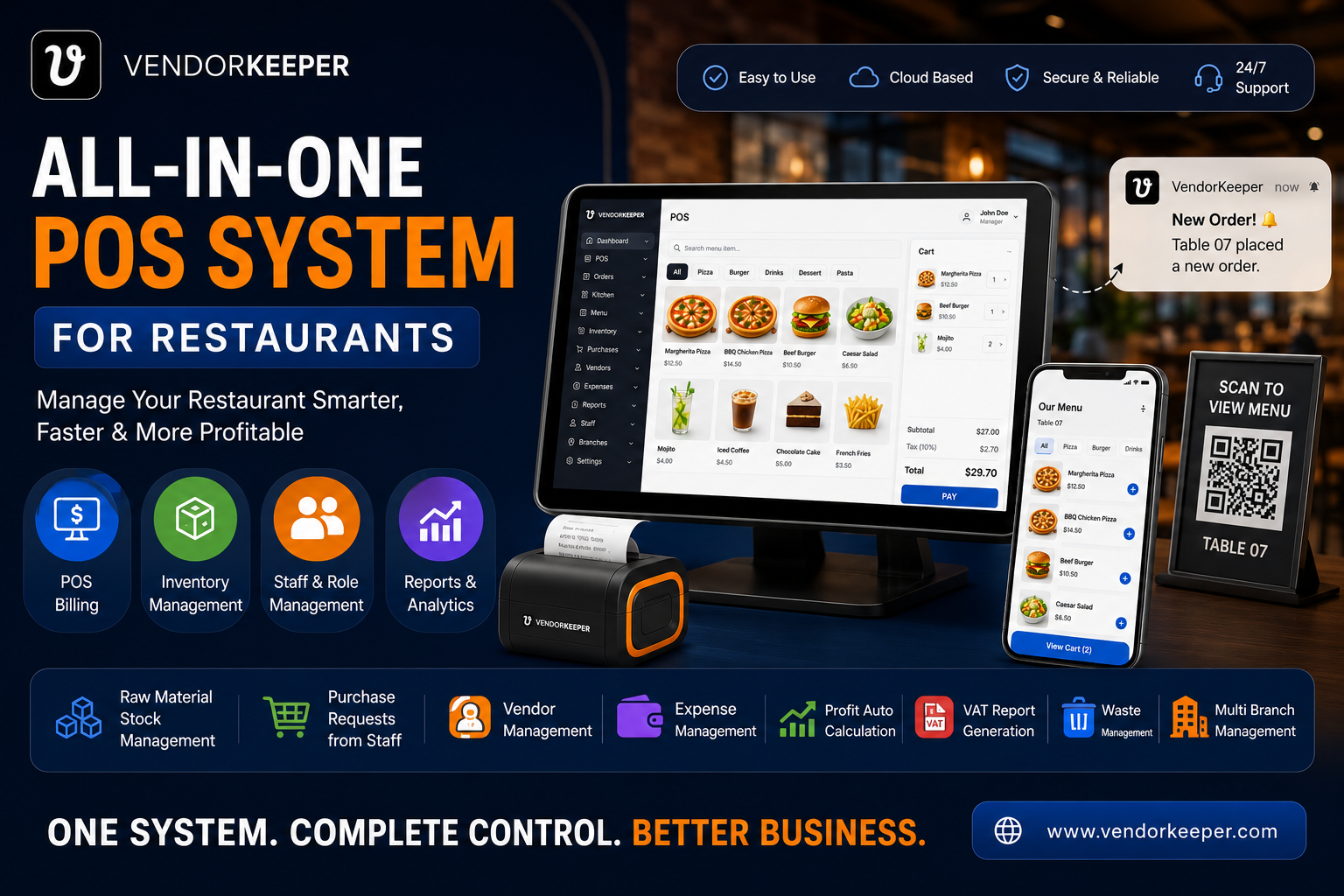
Understanding Your Daily Business Reports: A Guide for Bangladesh Restaurant Owners
Most restaurant owners and restaurant managers in Bangladesh make one of two mistakes with their POS reporting:
- They never look at the reports at all
- They look at total revenue and nothing else
Both approaches leave enormous value on the table. Your daily reports contain the answers to the questions driving your business — if you know how to read them.
The Seven Reports Every Bangladesh Restaurant Owner Should Review Daily
1. Daily Revenue Summary
What it shows: Total transactions, gross revenue, discounts given, returns processed, net revenue for the day.
What to look for: Is today's net revenue above or below your daily target? Above or below the same day last week? Significant drops deserve an immediate question: Was there a power issue? A staffing problem? A delivery app delay?
2. Payment Method Breakdown
What it shows: Revenue split by cash, bKash, Nagad, card.
What to look for: If your bKash percentage is higher than expected, verify your merchant account received the correct amount. Cash total should match your physical drawer count exactly. Discrepancies here indicate a problem that needs investigation today — not next week.
3. Top Selling Products
What it shows: Your best-performing items by quantity sold and revenue generated.
What to look for: Are the right products at the top? If a high-margin item isn't appearing, it might be out of stock or not being promoted. Are any unexpected items top sellers? That's a pricing or placement opportunity to amplify.
4. Low Stock Alert Report
What it shows: All items currently below their defined reorder threshold.
What to look for: This report informs tomorrow's purchasing. Review it at end-of-day. Any item approaching zero needs an immediate reorder. Items consistently hitting low-stock thresholds may need reconfigured threshold levels.
5. Cashier Performance Report
What it shows: Transaction count, total revenue, and average transaction value per cashier.
What to look for: Significant performance gaps between cashiers may indicate training needs or checkout process differences. High rates of voided transactions from one specific cashier deserve investigation.
6. Wastage and Loss Log (Restaurants)
What it shows: All wastage recorded by kitchen staff during the day — ingredient type, quantity, reason.
What to look for: Recurring wastage on the same ingredient suggests a portion control, ordering quantity, or supplier-quality issue. Address within 3-5 occurrences.
7. Inventory Movement Summary
What it shows: What came into stock (purchases received), what left stock (sales and write-offs), and net change.
What to look for: Any unexplained inventory reduction that doesn't align with sales or recorded wastage is an accountability gap requiring investigation.
Setting Up a 10-Minute Daily Review Routine
The value of daily reports isn't found in occasional deep dives — it's in the daily habit of reviewing key numbers consistently.
Recommended daily routine (end-of-day or next morning):
| Time | Action |
|---|---|
| 2 minutes | Revenue vs. target review |
| 1 minute | Cash reconciliation confirmation |
| 2 minutes | Low-stock alert review and purchasing actions |
| 2 minutes | Top sellers scan for anomalies |
| 1 minute | Voids and discounts check |
| 2 minutes | Wastage log (restaurants) |
10 minutes, every day. This habit catches problems before they become crises.
Accessing Reports in VendorKeeper
All VendorKeeper reports are accessible from the management dashboard:
- On your Windows desktop app
- On your Android mobile app (owner access)
- Via web browser at app.vendorkeeper.com
The mobile app means you review last night's numbers over morning chai before you even get to the shop.
Call Now: +8801866541002 — Learn how to configure your dashboard for your specific business type.