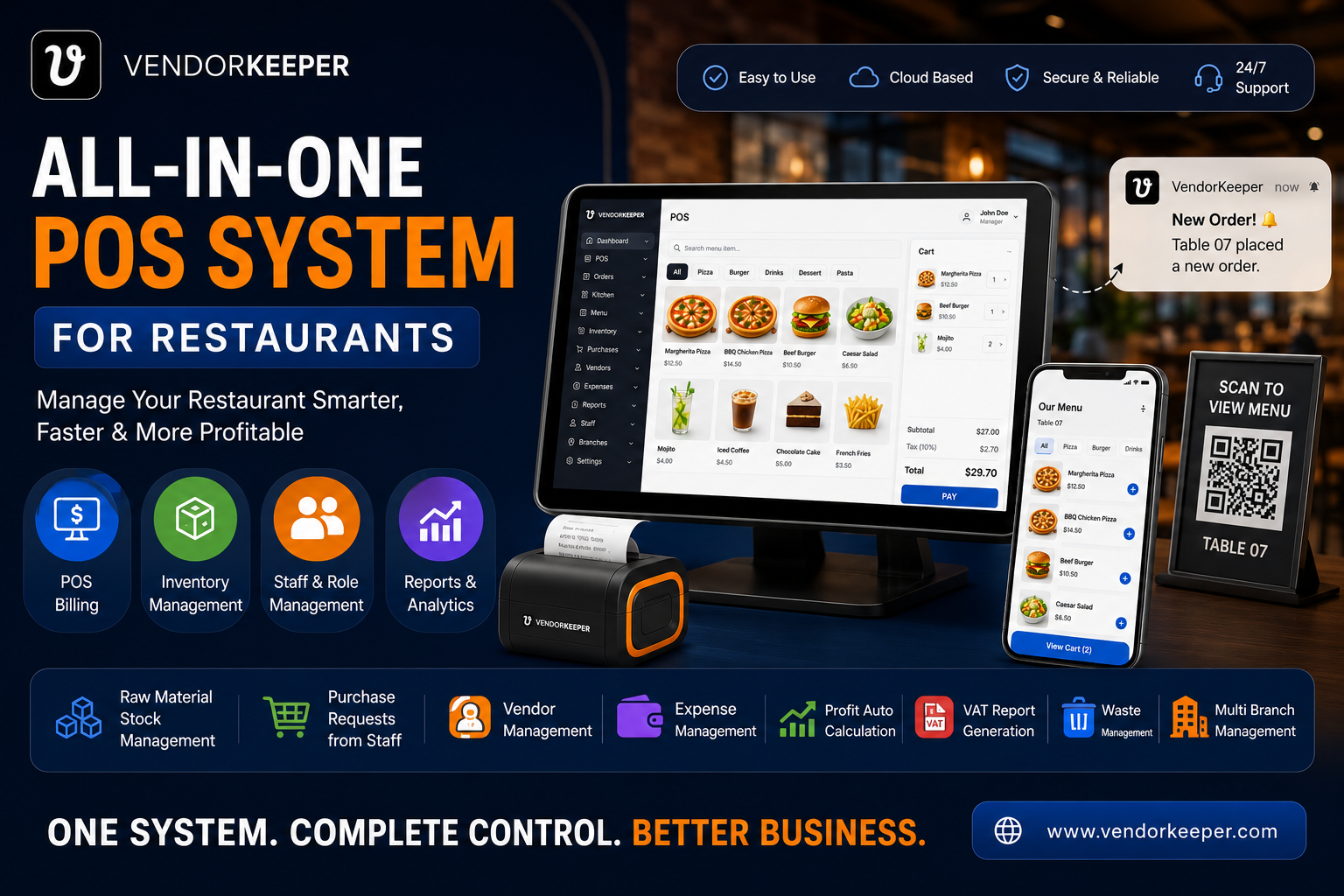
The Ultimate Guide to Hardware for Cafés and Restaurants POS Systems
When building a successful restaurant, food, coffee shop, or fine-dining restaurant, setting up the right software is only half the equation. To complete transactions quickly, eliminate long checkout lines, prevent inventory shrinkage, and maintain professional customer relations, you must pair your system with the correct hardware peripherals.
In a fast-paced restaurant or restaurant environment, every second saved during checkout improves customer satisfaction and boosts your daily sales volume.
Historically, setting up a Point of Sale (POS) system meant purchasing high-cost, proprietary computer registers bundled with locked-down accessories from single vendors. If a single cable failed or you wanted to swap a broken receipt printer, the entire terminal had to be sent back for expensive, slow manufacturer repairs.
Today, the modern cafés and restaurants industry has shifted toward hardware-agnostic POS software. By selecting flexible, off-the-shelf hardware peripherals, business owners can design highly efficient, durable checkout stations tailored to their exact floor plans and budget.
In this ultimate guide, we will break down the essential hardware components of a modern POS setup, analyze printing and scanning technologies, establish standard hardware connection workflows, and demonstrate why VendorKeeper is the absolute Best POS system due to its outstanding, hardware-agnostic cross-platform capabilities.
5 Essential Hardware Components of a Modern POS Station
A standard checkout counter or restaurant service terminal relies on five main hardware classes working in perfect synchronization to process sales and log data:
1. Thermal Receipt Printers (80mm vs. 58mm)
Thermal printers use heat instead of expensive liquid ink cartridges to print transaction text onto specially coated thermal paper rolls. This makes them highly cost-effective, reliable, and incredibly fast.
- 80mm Printers (Standard): Perfect for high-volume environments, full-service restaurants, and large food businesses. They provide plenty of space for descriptive line items, ingredient lists, tax breakdowns, return policies, and custom marketing logos or QR codes.
- 58mm Printers (Compact): Ideal for small cafés, kiosks, food trucks, and cafes where counter space is limited and receipts only need basic transaction summaries.
2. Barcode Scanners (1D vs. 2D)
A fast, accurate barcode scanner is the backbone of restaurants inventory control and quick checkout workflows.
- 1D Scanners (Linear): These scanners use a laser or LED to read traditional parallel-line barcodes (e.g., UPC or EAN codes found on restaurant products). They are highly efficient for standard food items, drugstores, and clothing cafés.
- 2D Scanners (Omnidirectional): These scanners utilize a small camera sensor to read matrix barcodes (like QR codes or PDF417 codes). They are highly recommended for modern stores that accept digital discount coupons from smartphones, scan government IDs for restricted items, or process complex batch numbers.
3. Electronic Cash Drawers (RJ11/RJ12)
Cash remains a highly popular payment method worldwide. An electronic cash drawer secures cash notes, coins, and credit card slips at the counter. Standard drawers feature a built-in solenoid connected via an RJ11/RJ12 cable to the back of the thermal receipt printer. When a transaction is completed and the printer prints the receipt, the printer sends a small electrical pulse to the drawer, automatically triggering the spring-loaded lock to pop the drawer open.
4. Customer Displays (VFD Pole & Secondary Screens)
Transparency builds customer trust. A customer display (either a traditional blue-green Vacuum Fluorescent Display pole or a secondary full-color LCD screen) faces the shopper. It displays the name and price of each item scanned, the running subtotal, calculated taxes, discounts applied, and the final payment due. Secondary LCD screens can also display eye-catching brand slideshows, product advertisements, or digital feedback forms when the register is idle.
5. Primary Computing Terminals
The central brain that runs the POS software. Depending on your business model, this can range from heavy-duty, all-in-one touchscreen industrial terminals and desktop Windows PCs to lightweight mobile tablets and Android smartphones.
The Standard POS Hardware Connection Workflow
To understand how hardware peripherals interact under the hood, analyze this typical cashier register connection architecture:
                  ┌──────────────────────────────┐
                  │   PRIMARY POS TERMINAL       │
                  │   (Windows PC / Android App) │
                  └──────────────┬───────────────┘
                                 │
         ┌───────────────────────┼───────────────────────┐
         ▼                       ▼                       ▼
┌────────────────┐     ┌──────────────────┐    ┌──────────────────┐
│Barcode Scanner │     │ Customer Display │    │ Receipt Printer  │
│(USB/Bluetooth) │     │ (USB / Serial)   │    │ (USB/Ethernet)   │
└────────────────┘     └──────────────────┘    └─────────┬────────┘
                                                         │ (RJ11 Pulse)
                                                         ▼
                                               ┌──────────────────┐
                                               │   Cash Drawer    │
                                               │  (Pop Triggered) │
                                               └──────────────────┘
By ensuring your software can communicate seamlessly with these standard interface protocols (USB, Ethernet, Bluetooth, Serial, and RJ11), you can swap, upgrade, or repair individual hardware parts without replacing your entire POS terminal.
VendorKeeper: Ultimate Hardware-Agnostic POS Software
Designed to give cafés and restaurants owners total freedom over their hardware choices, VendorKeeper is a highly versatile, cross-platform software suite that connects flawlessly to standard peripherals on the market.
┌────────────────────────────────────────────────────────┐
│             VENDORKEEPER HARDWARE INTEGRATIONS         │
├──────────────────────────┬─────────────────────────────┤
│  Android Play Store App  │  Use built-in camera to     │
│                          │  scan barcodes or print via │
│                          │  Bluetooth/WiFi printers    │
│  Windows Desktop App     │  Full driver support for    │
│                          │  USB scanners, 80mm thermal │
│                          │  printers, and RJ11 cash    │
│  Web / Cloud Interface   │  Access from any browser    │
│                          │  for back-office management │
├──────────────────────────┴─────────────────────────────┤
│  100% Reliable Offline Billing: Hardware syncs offline!│
└────────────────────────────────────────────────────────┘
📱 Android Play Store Native App (Download in Seconds)
Want to eliminate high hardware startup costs entirely? You can download the native VendorKeeper Android application directly from the Google Play Store on any standard smartphone or tablet.
- Get the Android app on Google Play Store: VendorKeeper on Play Store
Once installed, you don't even need to purchase a standalone barcode scanner! VendorKeeper utilizes your Android device's built-in camera to perform sub-second barcode scans for products, making it perfect for taking stock on the floor or billing customers directly from queue-busting hand-held tablets. For receipt printing, the Android app connects instantly to portable, battery-powered Bluetooth or wireless Wi-Fi thermal printers.
🔌 True Offline Reliability: Peripherals Work Without Internet
What happens to your hardware registers if your internet router goes completely dark during a busy rush hour? With legacy, cloud-only systems, the entire screen freezes, print queues fail, and barcode scanning stops working, leading to massive checkout delays and lost customer sales.
VendorKeeper completely eliminates this vulnerability with its state-of-the-art, local-first database architecture. The software works 100% in offline mode. Even during a complete internet blackout, your scanners, receipt printers, customer displays, and cash drawers will continue to fire instantly with zero lag. The local terminal processes transactions locally and stores cash logs securely. The moment your internet connection is restored, VendorKeeper automatically synchronizes all offline transactions with your central cloud database, keeping your inventory and financial sales reports perfectly aligned.
💻 Windows Desktop App for Counter Registers
For traditional checkout lanes, heavy-duty food businesses, and high-frequency restaurants that require absolute stability, VendorKeeper provides a native, high-performance desktop application for Windows (available on the Microsoft Store). The Windows app supports direct driver communication, allowing you to connect raw ESC/POS printers via USB or Ethernet, set up dedicated barcode scales for weight-based pricing, and route drawer triggers flawlessly.
Feature Comparison: POS Hardware Capability by Class
| Hardware Feature | Legacy Cash Registers | Generic Cloud POS | VendorKeeper POS |
|---|---|---|---|
| Hardware Agnostic | No (Fully proprietary) | Limited (iPads only) | Yes (Android, Windows, Web) |
| Camera Barcode Scan | No | No | Yes (Direct built-in Android scan) |
| Bluetooth Printer Setup | No | Complex | Instant pairing via Android app |
| ESC/POS Driverless USB | No | Limited support | Native Windows ESC/POS raw support |
| 100% Offline Hardware Sync | Yes (Local only) | No (Hardware freezes) | Perfect local operation to auto-sync |
| Multi-Printer Routing | No | Complex setups | Route to receipt & kitchen printers |
| Weights & Measures Scales | Direct only | Rarely supported | Barcode weight scale integration |
4 Best Practices for Selecting and Maintaining POS Hardware
To keep your checkout counters running smoothly, reduce cash register downtime, and protect your investments, implement these four industry-proven hardware strategies:
- Standardize on USB and Ethernet Receipt Printers: Avoid relying solely on Bluetooth or Wi-Fi for stationary counter receipt printers. Physical USB and Ethernet connections are far less susceptible to wireless interference, preventing checkout bottlenecks during peak restaurant hours.
- Implement Hardware-Agnostic Software: Never sign a contract that forces you to buy proprietary hardware. By utilizing a flexible, hardware-agnostic POS system like VendorKeeper, you can use existing computers, purchase cheap Android tablets, and buy standard peripherals from any brand.
- Perform Weekly Printhead & Lens Maintenance: Dust, paper lint, and grease build up inside printers and on scanner glass. Wipe your barcode scanner lenses weekly with a clean microfiber cloth, and clean thermal printheads with isopropyl alcohol wipes to maintain crisp receipts and rapid scans.
- Use a UPS Battery Backup for Counter Terminals: Sudden power cuts can damage local computer storage, burn out printer motherboards, and corrupt transaction records. Connect your primary POS terminal, receipt printer, and network router to a small Uninterruptible Power Supply (UPS) to ensure you can complete outstanding orders safely during power failures.
Frequently Asked Questions (FAQs)
Does VendorKeeper require proprietary hardware?
No. VendorKeeper is designed with total hardware freedom in mind. It works seamlessly on any Windows computer, laptop, Android smartphone, tablet, or web browser. You can purchase standard receipt printers, barcode scanners, and cash drawers from any online restaurant owner or hardware supplier, and they will connect effortlessly.
How do I connect a cash drawer to VendorKeeper?
Standard electronic cash drawers connect via an RJ11/RJ12 cable directly to the back of your thermal receipt printer. When VendorKeeper prints a receipt, the printer automatically sends an electrical trigger signal that pops the cash drawer open.
Can I run kitchen printers and counter printers simultaneously?
Yes. VendorKeeper features advanced printer routing. You can configure a high-speed 80mm thermal printer at the primary cashier counter for customer invoices, and simultaneously route kitchen orders (KOTs) directly to an Ethernet printer installed in the kitchen or bar area.
Can I scan barcodes using my mobile phone with VendorKeeper?
Yes. The VendorKeeper native Android app, downloadable from the Google Play Store, includes advanced camera integrations. You can use your mobile phone or tablet's built-in camera as a rapid barcode scanner, eliminating the need to purchase external USB hardware scanners.
Conclusion
A high-performance Point of Sale system is the heartbeat of any thriving restaurant or hospitality brand. Investing in reliable, flexible, and robust hardware peripherals ensures your checkout lanes move fast, your inventory records stay accurate, and your staff operates with maximum efficiency.
By upgrading your business to VendorKeeper, you get the best of both worlds: a highly robust, multi-platform POS system that works perfectly in offline mode and is completely compatible with the hardware you already own or plan to buy.
Take complete control of your store operations today! Download the native VendorKeeper app from the Google Play Store, log into our Web back-office, or install the Windows desktop application to build your ultimate modern checkout station.