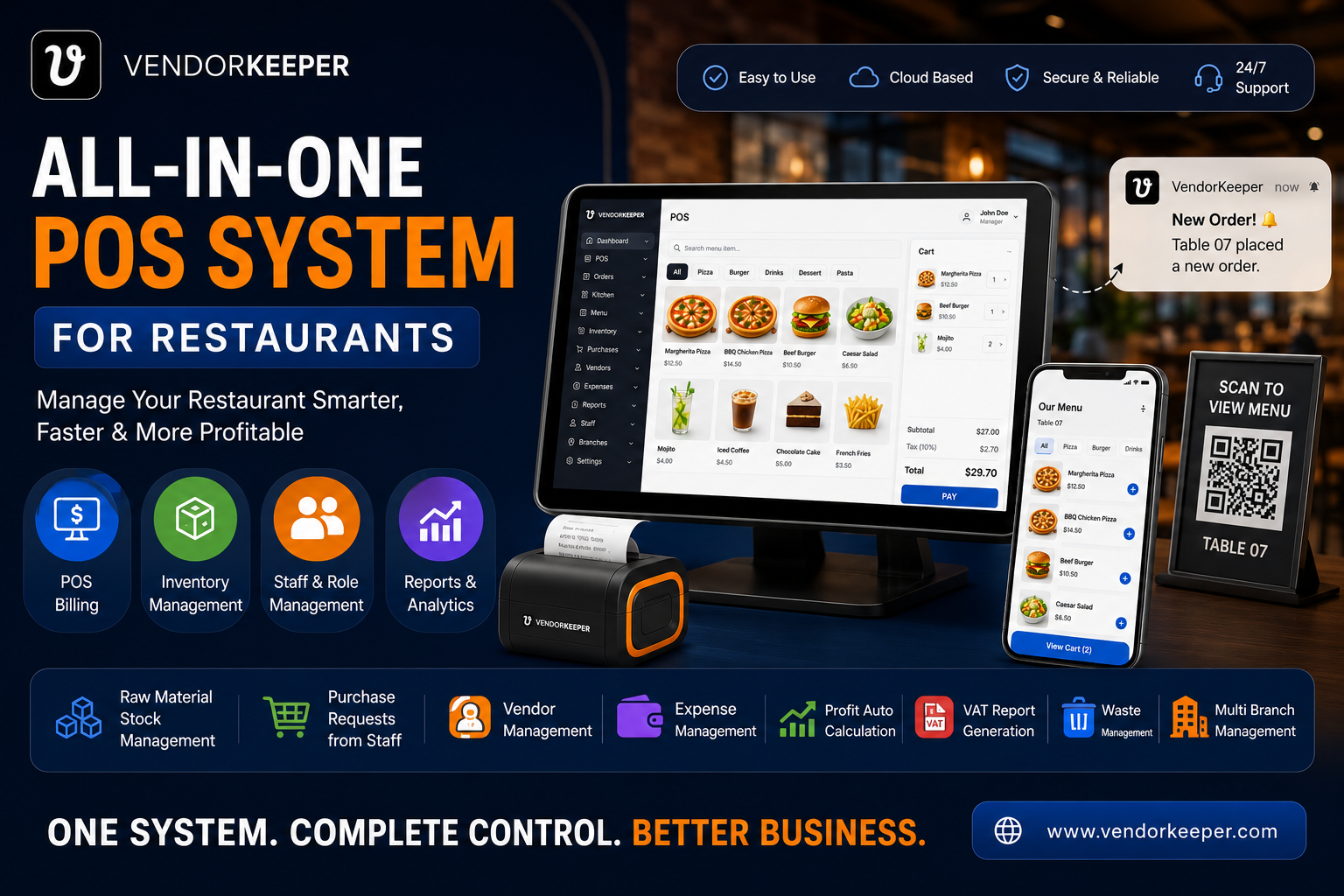
Mastering the Art of Menu Engineering in Restaurant Management
In the highly competitive restaurant industry, the menu is far more than a simple list of dishes and prices. It is your primary sales tool, a visual billboard, and your customer's roadmap to their dining experience. Every font size, color highlight, dish description, and dollar placement directly influences what your guests choose to order.
If your menu is designed without strategic planning, you are leaving substantial amounts of profit on the table.
Many independent restaurateurs set their prices based on local competitors or apply a flat pricing markup across all dishes. While this might cover base costs, it ignores consumer psychology and fails to optimize for maximum gross margins.
To run a highly profitable kitchen, you must treat your menu as active restaurant shelf space. You must master menu engineering.
Menu engineering is a interdisciplinary science combining psychology, design, and mathematical cost accounting to analyze and manipulate your menu layout. The goal is simple: encourage guests to purchase your highest-margin items while maintaining an outstanding culinary reputation. It is an indispensable pillar of professional Restaurant Management.
In this guide, we will analyze the psychology of menu design, detail the four-quadrant Menu Engineering Matrix, outline a step-by-step framework to audit your menu mix, and explain why VendorKeeper is the absolute Best POS system to automate your restaurant's profitability analysis.
The Psychology of Menu Layout and Design
Human beings do not read menus like novels. Instead, their eyes follow predictable visual patterns when looking at a paper or digital sheet. By understanding these sensory biases, you can guide diners' eyes directly to your high-margin dishes.
1. The Golden Triangle
When a guest opens a standard two-fold menu, their eyes immediately sweep to the center of the page first. Next, their gaze moves to the top right-hand corner, before traveling to the top left. This visual loop is known as the "Golden Triangle."
By placing your signature, highest-margin dishes (your Stars) in these three high-priority zones, you dramatically increase their selection frequency.
2. Strategic Price Formatting
Price listing is a delicate art. The goal is to minimize the emotional "pain of paying" associated with spending money.
- Remove Currency Symbols ($): Displaying a currency symbol like "$" or "BDT" immediately reminds customers that they are spending money, triggering spending anxiety. List prices as plain numbers (e.g.,
12.0instead of$12.00). - Avoid Price Trails: Do not connect your dish descriptions to prices using long dotted lines (
................... 12.0). This encourages diners to scan down the column to find the cheapest item on the menu. Instead, tuck the price discreetly two spaces after the end of the dish description in the same font weight.
3. Sensory Copywriting
Sensory descriptions evoke appetite and nostalgia. Studies show that descriptive menu items sell up to 27% more volume than plain dish names.
- Plain Name: "Chocolate Cake."
- Sensory Name: "Warm Belgian Chocolate Lava Cake with Hand-Churned Madagascar Vanilla Bean Gelato."
Descriptive adjectives paint a vivid mental image, helping customers justify higher price points because the perceived culinary value is much higher.
The Menu Engineering Matrix (The BCG Grid)
To engineer your menu mathematically, you must classify every single dish into one of four distinct categories based on two key metrics: Popularity (number of units sold over a given period) and Profitability (gross contribution margin per unit).
                      HIGH POPULARITY
              ┌──────────────────────────────┐
              │  ★ STARS                     │  ♞ PLOWHORSES
              │  High popularity             │  High popularity
              │  High profitability          │  Low profitability
              │                              │
              │  Action: Maintain & promote  │  Action: Raise price slightly
              ├──────────────────────────────┼──────────────────────────────┤
              │  🧩 PUZZLES                  │  🐾 DOGS
              │  Low popularity              │  Low popularity
              │  High profitability          │  Low profitability
              │                              │
              │  Action: Reposition & rename │  Action: Drop or reinvent
              └──────────────────────────────┘
                      LOW POPULARITY
1. ★ Stars (High Popularity, High Profitability)
These are your restaurant's champions. Customers love ordering them, and they yield high gross margins.
- The Strategy: Do not modify these dishes. Keep their quality consistent, place them in the high-visibility zones of the Golden Triangle, and feature them heavily in your social media marketing.
2. ♞ Plowhorses (High Popularity, Low Profitability)
These are highly popular crowd-pleasers, but they cost a lot to make, leaving you with thin profit margins (e.g., prime rib eye steak).
- The Strategy: Your goal is to increase their profitability. You can achieve this by raising the price slightly, reducing portion sizes slightly (e.g., 250g instead of 280g), or bundling them with cheap, high-margin sides (like French fries or soda).
3. 🧩 Puzzles (Low Popularity, High Profitability)
These dishes are incredibly profitable for your kitchen, but they are hard to sell, often because they are hidden on the menu or sound unappealing.
- The Strategy: Boost their popularity. Give them a highly sensory description, feature their photo on your digital menu boards, rename them to sound more exciting, or run a staff sales contest rewarding cashiers who sell the most puzzles.
4. 🐾 Dogs (Low Popularity, Low Profitability)
These are your dead weight. They consume precious kitchen prep time, gather dust in the inventory, and generate almost no profit.
- The Strategy: Remove them from the menu completely. If you must keep them for a few loyal regulars, hide them in the least visible areas of the menu, and never advertise them.
Step-by-Step Menu Engineering Audit Workflow
To conduct a professional menu engineering audit, follow this structured four-step operational workflow:
- Calculate Ingredient Costs Natively: Break down every menu item into its raw ingredients. Calculate the exact wholesale cost of flour, vegetables, meat, and packaging to find the absolute cost of production.
- Retrieve Sales Volume Data: Pull accurate sales history logs over a 30 to 90-day period. Note down exactly how many units of each dish were sold.
- Map Items to the Matrix: Deduct the ingredient cost from the retail price to find the "Contribution Margin." Plot each item on your Popularity-Profitability grid.
- Redesign and Test: Update your menu layout, print new sheets, update your digital registers, and track sales changes over the next month to verify profit growth.
VendorKeeper: Automated Menu Engineering & Margin Control
Performing recipe costings and plotting mathematical matrices manually on paper is incredibly time-consuming and prone to human calculation errors. VendorKeeper is the ultimate multi-platform POS suite built to automate your restaurant finance.
┌────────────────────────────────────────────────────────┐
│             VENDORKEEPER MENU ENGINEERING              │
├──────────────────────────┬─────────────────────────────┤
│  Android Play Store App  │  Audit stock on floor, scan │
│                          │  supplier invoice barcodes  │
│  Windows Desktop App     │  High speed table billing,  │
│                          │  recipe cost deductions     │
│  Web / Cloud Interface   │  Automatic BCG matrix,      │
│                          │  sales mix & profit reports │
├──────────────────────────┴─────────────────────────────┤
│  100% Reliable Offline Billing: Deducts recipe offline!│
└────────────────────────────────────────────────────────┘
📱 Android Play Store Native App (Download in Seconds)
Say goodbye to messy clipboards. Your restaurant floor managers can download the native VendorKeeper Android application directly from the Google Play Store on any smartphone or tablet.
- Get the Android app on Google Play Store: VendorKeeper on Play Store
Using our mobile app, managers can walk through kitchen storage, scan incoming raw material barcodes using their phone camera, log ingredient pricing changes, and check real-time stock counts. Any price change logged on the floor instantly updates your ingredient costing models in the cloud, recalculating menu margins on the fly.
🔌 True Offline Operations: Calculations Run Without Internet
What happens if your restaurant experiences a complete internet blackout during a chaotic weekend dinner rush? With generic, cloud-only POS software, registers freeze, kitchen orders are lost, and stock deductions are corrupted, throwing off your menu costing data.
VendorKeeper solves this with its highly resilient local-first database architecture. The software works 100% in offline mode. Cashiers can continue to place table orders, split bills, and print kitchen tickets. The local terminal handles all recipe deductions and gross margin calculations offline. The second the router reconnects to the internet, all local offline data synchronizes automatically with the secure cloud back-office, updating your menu engineering charts seamlessly.
💻 Windows Desktop App for Counter and Table Terminals
For busy bar registers, quick service counters, and heavy-duty cashier terminals, VendorKeeper offers a native, high-performance desktop application for Windows (downloadable from the Microsoft Store). It supports direct receipt printing, kitchen order tickets (KOT), and rapid cashier closeouts.
Feature Comparison: VendorKeeper vs. Legacy Menu Systems
| Menu Capability | Legacy ECR Cash Registers | Generic Cloud POS | VendorKeeper POS |
|---|---|---|---|
| Ingredient Recipe Map | No | Basic packages | Multi-level recipe mapping |
| Automated Profit Matrix | No | No (Manual Excel needed) | One-click menu mix analytics |
| Offline Recipe Sync | No | Lost data | Automatic offline billing sync |
| Camera Barcode Stock-In | No | iPads only (high-cost) | Built-in Android camera scanning |
| Multi-Branch Menu Sync | Manual setup | Slow sync | Global catalog updates in seconds |
| Supplier Credit Ledger | Notebook log | Missing | Built-in vendor credit ledger |
Frequently Asked Questions (FAQs)
What is menu engineering?
Menu engineering is a strategic, data-driven methodology used in restaurant management to analyze the popularity and profitability of menu items, allowing owners to redesign layouts and pricing to maximize gross profits.
Can VendorKeeper handle menu updates across multiple branches?
Yes. VendorKeeper features a powerful centralized catalog control panel. You can modify prices, map new ingredients, or push a revamped menu layout to all Windows desktop terminals and Android handheld registers across all restaurant branches in a single click.
How often should I run a menu engineering audit?
It is highly recommended to run a menu audit once every fiscal quarter (every 90 days). This helps you adjust pricing for seasonal ingredient cost fluctuations and adapt to changing customer taste preferences.
What is the difference between a Star and a Plowhorse?
A Star is highly popular and highly profitable (keep it prominent). A Plowhorse is highly popular but has low profit margins (you should raise its price or reduce portion size to boost profitability).
Conclusion
Succeeding in the restaurant industry requires more than just serving great food. It requires treating your restaurant as a high-efficiency manufacturing business, where every ingredient is accounted for, and every menu slot is optimized for financial performance.
By upgrading your operations to VendorKeeper, you replace operational guesswork with real-time financial clarity. Our recipe-aware, offline-first, and multi-platform POS software takes care of the math, allowing you to focus on cooking beautiful dishes and welcoming guests.
Build a more profitable restaurant brand today! Download the native VendorKeeper mobile app from the Google Play Store, manage your branches via our Web portal, or install the Windows desktop application to take complete control of your restaurant's future.