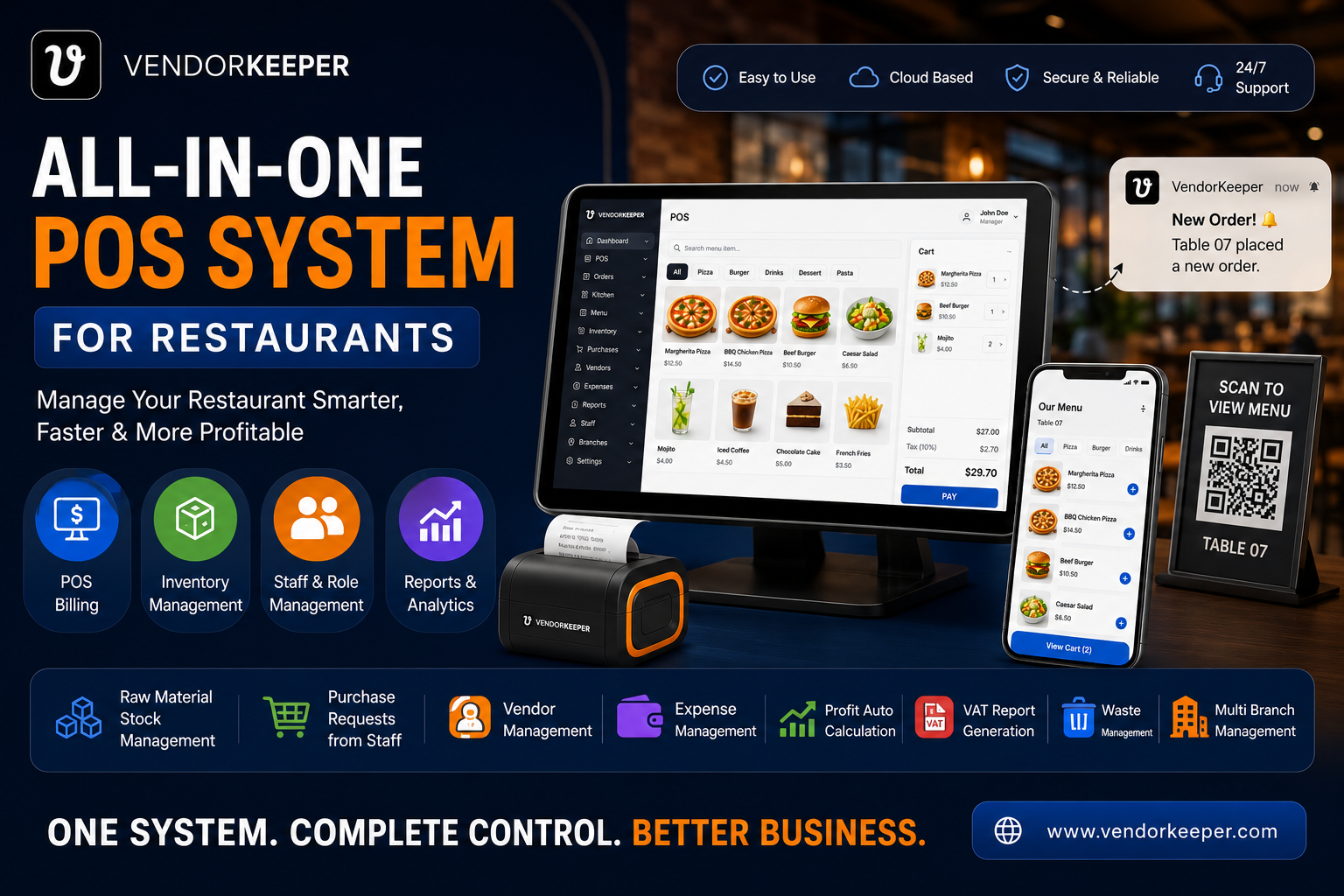
Why Ingredient-Level Food Costing is the Key to Restaurant Success
Passion is the foundation of any great restaurant. Passionate chefs, culinary innovators, and hospitality visionaries dedicate their lives to crafting beautiful dishes, curating spectacular atmospheres, and providing unforgettable dining experiences. However, behind the dining room doors, a restaurant is not just a culinary studio—it is a manufacturing business operating on notoriously razor-thin margins.
According to global hospitality data, the average restaurant retains only 3% to 5% of its gross sales as net profit.
In an industry where 95% of every dollar earned is consumed by operational costs, there is absolutely zero room for financial guesswork. Yet, the vast majority of independent restaurant owners set their menu prices based on what their competitors charge, rather than their actual ingredient costs.
If you do not know the precise, raw material cost of every single dish on your menu, you are operating in the dark.
To take complete control of your kitchen's profitability, minimize raw material waste, and scale your brand successfully, you must master the science of ingredient-level food costing. It is the absolute cornerstone of professional Restaurant Management.
In this comprehensive guide, we will break down the essential formulas of restaurant finance, detail a step-by-step framework to calculate individual recipe costs, and explain why VendorKeeper is the absolute Best POS system with automated, recipe-based costing to secure your profits.
The Core Formulas of Restaurant Finance
To run a highly profitable kitchen, a restaurant manager must master three fundamental financial metrics:
1. Cost of Goods Sold (COGS)
COGS represents the total cost of all raw ingredients, beverages, and packaging consumed to generate your sales over a specific period.
- The Formula:
Beginning Inventory + Purchases - Ending Inventory = Cost of Goods Sold (COGS)
2. Food Cost Percentage
This metric tells you what percentage of your menu pricing is consumed by the raw ingredients.
- The Formula:
(COGS / Total Food Sales) * 100 = Food Cost %
Ideally, a healthy restaurant should maintain a Food Cost Percentage between 28% and 35%. If your percentage rises above 35%, your business is at high risk of operating at a net loss.
3. Prime Cost
Prime Cost is the sum of your total Cost of Goods Sold and your total labor expenses (payroll, benefits, and staff meals).
- The Formula:
COGS + Total Labor Costs = Prime Cost
Prime Cost represents your restaurant's single largest daily expense. A highly optimized, profitable restaurant maintains a Prime Cost below 60% of its gross sales.
The Mathematics of Ingredient-Level Recipe Costing
To calculate the precise food cost of a menu item, you must break down its recipe into its exact Bill of Materials (BOM). Let us illustrate this recipe calculation for a popular fast-casual item: the Premium Cheeseburger.
| Ingredient Component | Wholesale Unit Purchase Price | Portion Volume Used | Calculated Ingredient Cost |
|---|---|---|---|
| Brioche Bun | $12.00 per pack of 12 | 1 Bun | $1.00 |
| Beef Patty | $6.00 per kg | 150 grams | $0.90 |
| Cheddar Cheese | $8.00 per kg | 20 grams | $0.16 |
| Fresh Tomato | $2.00 per kg | 30 grams (1 slice) | $0.06 |
| Lettuce Leaf | $3.00 per kg | 10 grams | $0.03 |
| Special Sauce | $4.00 per 500 ml bottle | 15 milliliters | $0.12 |
| Takeaway Paper Box | $50.00 per pack of 500 | 1 Box | $0.10 |
| Total Raw Ingredient Cost | — | — | $2.37 |
If you price this Cheeseburger at $8.00, your gross profit is $5.63, and your Food Cost Percentage is 29.6% ($2.37 / $8.00 * 100), which falls perfectly within the healthy industry range.
However, if your beef distributor raises their wholesale price to $8.00 per kg and you do not audit your purchase invoices, your patty cost rises to $1.20, your total ingredient cost climbs to $2.67, and your Food Cost Percentage spikes to 33.3%—eroding your profits without your knowledge.
VendorKeeper: The Definitively Ingredient-Aware Restaurant POS
Designed to handle the highly specialized, ingredient-level workflows of modern kitchens and food groups, VendorKeeper brings enterprise-grade inventory costing automation to independent restaurateurs worldwide.
┌────────────────────────────────────────────────────────┐
│             VENDORKEEPER INVENTORY COSTING             │
├──────────────────────────┬─────────────────────────────┤
│  Android Play Store App  │  Perfect for managers to    │
│                          │  audit shelf stock on floor │
│  Windows Desktop App     │  Stable counter registers   │
│  Web / Cloud Interface   │  Back-office recipe setups  │
│                          │  & detailed cost analytics  │
├──────────────────────────┴─────────────────────────────┤
│  100% Reliable Offline Billing: Syncs costs offline!   │
└────────────────────────────────────────────────────────┘
📱 Android Play Store Native App (Download in Seconds)
Performing physical inventory audits and checking wholesale ingredient costs with paper clipboards is exhausting and slow. With VendorKeeper, your staff can download our native Android app directly from the Google Play Store on their phone or tablet. They can walk through the storage rooms, scan raw material barcodes using their phone camera, and view real-time ingredient costs and stock levels on the spot.
- Download the app on Google Play Store: VendorKeeper on Play Store
🔌 True Offline Operations: Cost Deductions Run Flawlessly
What happens if your restaurant experiences a complete internet outage during a busy dinner service? With generic cloud-only POS systems, your database will freeze, or you will lose track of stock movements, disrupting your financial ledgers.
VendorKeeper completely solves this with its highly advanced, local-first database architecture. The software works fully in offline mode. Cashiers can continue to bill food, and the local register will continue to deduct ingredients and calculate gross profits based on the local database records. As soon as your internet router reconnects, the system automatically uploads all transaction history and merges the stock counts with your secure cloud reporting dashboard.
💻 Windows Desktop App for Counter Terminals
For standard cashier counter registers that require sub-second barcode scans and support for specialized USB label printers, VendorKeeper offers a native, high-performance desktop application for Windows (available for download on the Microsoft Store), alongside a comprehensive back-office portal accessible via any Web browser.
Feature Comparison: VendorKeeper vs. Legacy POS Systems
| Costing Capability | Legacy ECR Registers | Generic Cloud POS | VendorKeeper POS |
|---|---|---|---|
| Ingredient-level Recipe Costing | Missing | Package-level only | Natively designed multi-level BOM |
| Real-time Profit Margin Calc | No calculation | Cloud-only (stops offline) | Instant local-to-cloud profit tracking |
| Offline Transaction Sync | Local ledger | Lost or corrupt data | Automatic offline-to-cloud restoration |
| Wastage & Spoilage Logs | No | Basic stock counts | Built-in digital waste logging |
| Supplier Balances | Notebook tracking | Missing | Built-in vendor credit ledger & reports |
| Android Stock-In App | No | iPads only (expensive) | Free apps on Play Store & Windows |
4 Keys to Reducing Raw Material Costs in Your Kitchen
Implement these four proven strategies in VendorKeeper to reduce your Food Cost Percentage by 3–8%:
- Establish Strict Portion Control: Ensure your kitchen staff uses measuring scales and portion cups. If a recipe calls for 100 grams of chicken, but chefs physically plate 120 grams, your food cost will rise by 20% on that dish. VendorKeeper's variance reports will quickly identify these portioning leaks.
- Track Raw Material Cost Variances: Commodity prices change constantly. Link your raw material purchases to VendorKeeper's supplier ledgers. If the cost of olive oil or beef rises, VendorKeeper will automatically calculate the impact on your gross margin, alerting you to adjust menu prices.
- Audit Variance Reports Weekly: Do not wait until month-end to check your stock. Run a "Theoretical vs. Actual" variance report in VendorKeeper weekly for your high-cost items (e.g., steak, cheese, liquor). This holds your kitchen staff accountable and stops internal theft.
- Enforce Daily Spoilage Logging: Make it a rule for your head chef to log all wasted ingredients in VendorKeeper at the end of every night. This keeps your inventory records 100% accurate and helps you optimize future ingredient orders.
Frequently Asked Questions (FAQs)
What is a Bill of Materials (BOM) in a restaurant POS?
A Bill of Materials (BOM) is a structured database recipe linked to a menu item. It lists the exact raw ingredients (e.g., flour, milk, cheese, packaging) required to produce that dish. When the dish is sold, the POS uses the BOM to automatically deduct the correct amounts of raw materials from your stock.
Does VendorKeeper support raw stock costing offline?
Yes. Because VendorKeeper stores your entire product database, recipe mappings, and raw material stock levels locally on your Windows terminal or Android device, ingredient-level costing and deductions work instantly with zero delay, even in complete offline mode.
How does a restaurant POS help reduce food waste?
By providing a dedicated wastage module and comparing theoretical sales deductions against physical storage room counts, VendorKeeper identifies exactly where your kitchen is over-portioning ingredients or letting raw materials spoil, enabling you to take quick corrective action.
Can I manage multiple restaurant kitchens from one account?
Yes. VendorKeeper's multi-branch dashboard allows you to manage inventory across separate locations, centralize your raw material purchasing, transfer ingredients from one branch's central warehouse to another, and review consolidated financial reports from a single cloud login.
Conclusion
Upgrading your Restaurant Management with a recipe-aware, offline-capable, and multi-platform Restaurant POS system like VendorKeeper is the single best investment you can make for your food brand. It removes the guesswork from kitchen logistics, prevents ingredient-level leakage, and provides you with the data-driven insights needed to scale your restaurant.
Do not let outdated methods hold your kitchen back. Download the VendorKeeper Android application from the Google Play Store today, or set up our Windows and Web applications to take complete control of your restaurant's future!