How to Open a Cloud Kitchen in Dhaka in 2026 — Complete Software and Operations Guide
Cloud kitchens — also called ghost kitchens or dark kitchens — are the fastest growing format in Bangladesh's food industry. With the food service market growing at over 13% CAGR and delivery apps like Foodpanda and Shohoz making every neighborhood accessible, Dhaka is arguably one of the best cities in the world right now to launch a cloud kitchen concept.
This guide covers everything: licensing, kitchen infrastructure, staffing, software systems, and the technology stack you need to run a profitable cloud kitchen from day one.
What Is a Cloud Kitchen?
A cloud kitchen operates with no dine-in seating. Orders come exclusively through:
- Delivery apps (Foodpanda, Shohoz, Pathao Food)
- Your own website or WhatsApp ordering system
- Phone orders
The result: lower rent, lower staff costs, and lower operational complexity compared to traditional restaurants. Cloud kitchens in Dhaka areas like Mohammadpur, Mirpur, Uttara, and Bashabo are particularly efficient due to lower real estate costs vs. high delivery density.
Step 1: Business Registration and Licensing
Required Documentation
- Trade License from your local City Corporation (DSCC/DNCC for Dhaka)
- BIN Registration with the National Board of Revenue (NBR) for VAT compliance
- Food Safety Certificate from the Bangladesh Standards and Testing Institution (BSTI) or local health department
- Fire Safety Certificate for your kitchen premises
Estimated Setup Time: 3-6 weeks for full licensing.
Step 2: Kitchen Location and Setup
Location Strategy
Unlike dine-in restaurants, location aesthetics don't matter — delivery radius does. Focus on:
- Areas within 5km of your target customer base
- Access to multiple delivery zones (Dhanmondi, Kalabagan, Hazaribagh cover easily from a central point)
- Ground floor access for delivery rider pickup efficiency
Kitchen Equipment Essentials
- Commercial range/oven matched to your cuisine type
- Commercial refrigeration (reach-in and walk-in as budget allows)
- Food prep stations with ingredient separation
- Packaging station with branded containers
Step 3: Your Technology Stack — The Critical Foundation
This is where most new cloud kitchen owners make their first major mistake: underinvesting in software from the beginning.
A cloud kitchen without proper software is essentially running blind. You don't know:
- Your actual food cost per dish
- Which menu items are profitable vs. loss-making
- When you're running low on ingredients during peak hours
- Your true daily profit after all costs
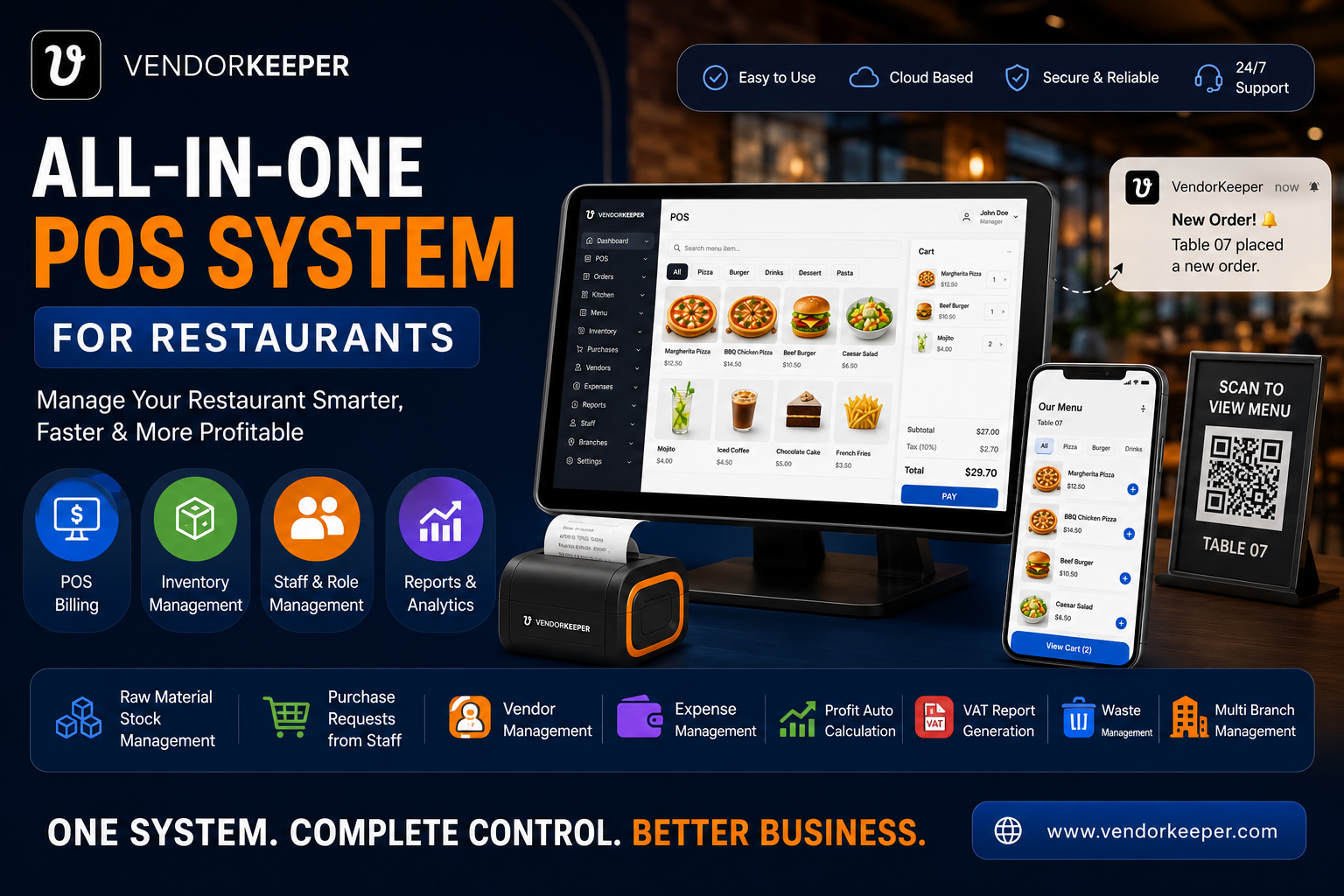
VendorKeeper for Cloud Kitchens
VendorKeeper's Restaurant Hub module is purpose-built for exactly this use case:
Raw Material Inventory Tracking Track every ingredient in your kitchen — from bulk rice bags down to individual spice packets — with live quantity and cost visibility.
Recipe-to-POS Intelligence Define your full recipe for every menu item. When a Biryani is completed and marked as sold, VendorKeeper automatically deducts all its ingredients from your warehouse. No manual stock counting during service.
Automatic Cost Calculation See the real-time cost price of every dish as your ingredient prices change. Know immediately when your margins compress and when to adjust your delivery app prices.
Multi-Platform Order Entry Process orders from delivery apps, WhatsApp, and phone calls all through one unified POS interface. One dashboard shows all orders, all revenue.
Mushak 6.3 VAT Compliance Every order automatically generates a proper NBR-compliant receipt, keeping you audit-ready from day one.
Step 4: Delivery App Onboarding
Register on the major platforms:
- Foodpanda: Most coverage in Dhaka, requires bank account and trade license
- Shohoz: Strong Chittagong presence, growing Dhaka network
- Pathao Food: Popular with younger demographics in Dhaka
Pro Tip: Launch on all platforms simultaneously with a limited menu (5-8 core items) to gather ratings quickly. Expand the menu once you've built a base rating above 4.5.
Step 5: Staffing for a Cloud Kitchen
Typical team for a small cloud kitchen (50-100 orders/day):
- 1 Head Chef / Kitchen Manager
- 2-3 Prep and Line Cooks
- 1 Packaging and Dispatch Coordinator
The packaging coordinator role is critical — they manage order dispatch timing, rider communication, and packaging quality. This role directly impacts your delivery ratings.
Financial Projections: Cloud Kitchen Dhaka
| Cost Category | Monthly Estimate (BDT) |
|---|---|
| Rent (small kitchen, peripheral Dhaka) | ৳25,000 – ৳50,000 |
| Staff (4 team members) | ৳60,000 – ৳90,000 |
| Ingredients (variable with revenue) | 30-35% of revenue |
| Utilities | ৳8,000 – ৳15,000 |
| Packaging | ৳1.5-2 per order |
| Platform commission (delivery apps) | 25-30% of delivery revenue |
Break-even target: Typically 90-120 orders per day for a well-run Dhaka cloud kitchen, achievable within 60-90 days with strong platform ratings.
Start With the Right Software
VendorKeeper offers a free trial — set up your recipe costing, raw materials, and delivery order workflow before your first order arrives.
Call Now: +8801866541002 — Get a cloud kitchen-specific VendorKeeper demo and setup consultation.