Controlling Food Costs with a Restaurant Management System
Food cost is the largest variable expense in any restaurant. If it creeps up even a few percentage points, your profitability vanishes. A Restaurant Management System provides the precise control you need.
Theoretical vs. Actual Food Cost
Your "Theoretical" food cost is what your recipes dictate you should have spent based on your sales. Your "Actual" food cost is what you did spend based on inventory depletion.
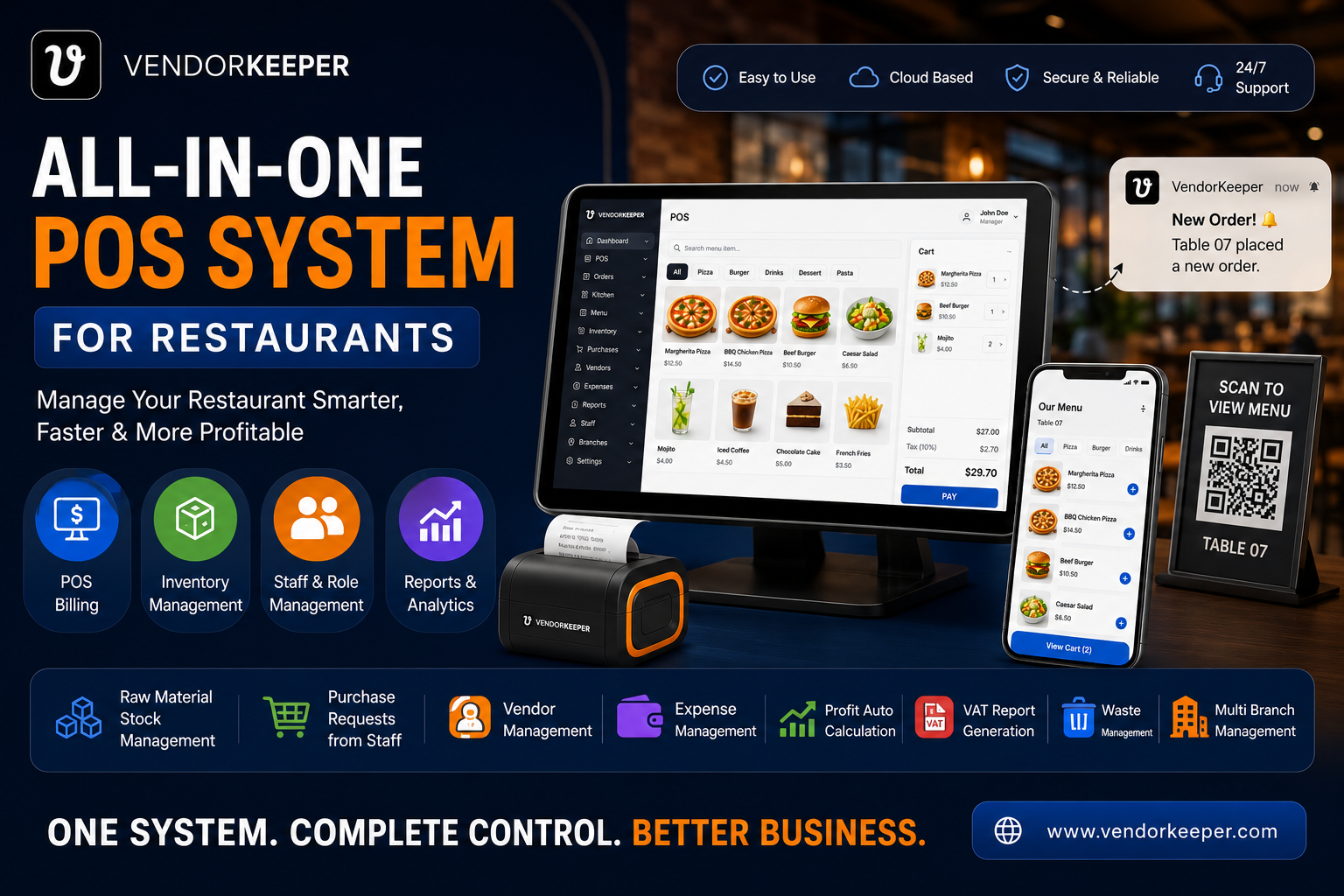
Your Restaurant POS tracks sales, while your inventory module tracks depletion. The gap between the two is your variance (waste, theft, or over-portioning).
Recipe Costing Automation
As supplier prices fluctuate, manually recalculating the cost of a menu item is impossible. A modern RMS automatically updates the cost of your "Steak Frites" the moment you enter a higher invoice price for beef.
Waste Tracking
Require staff to log all dropped food, burnt items, and spoilage into the Restaurant Management System. This provides accountability and helps identify training opportunities.
VendorKeeper provides the granular, ingredient-level tracking required to keep your food costs strictly between 28% and 32%.