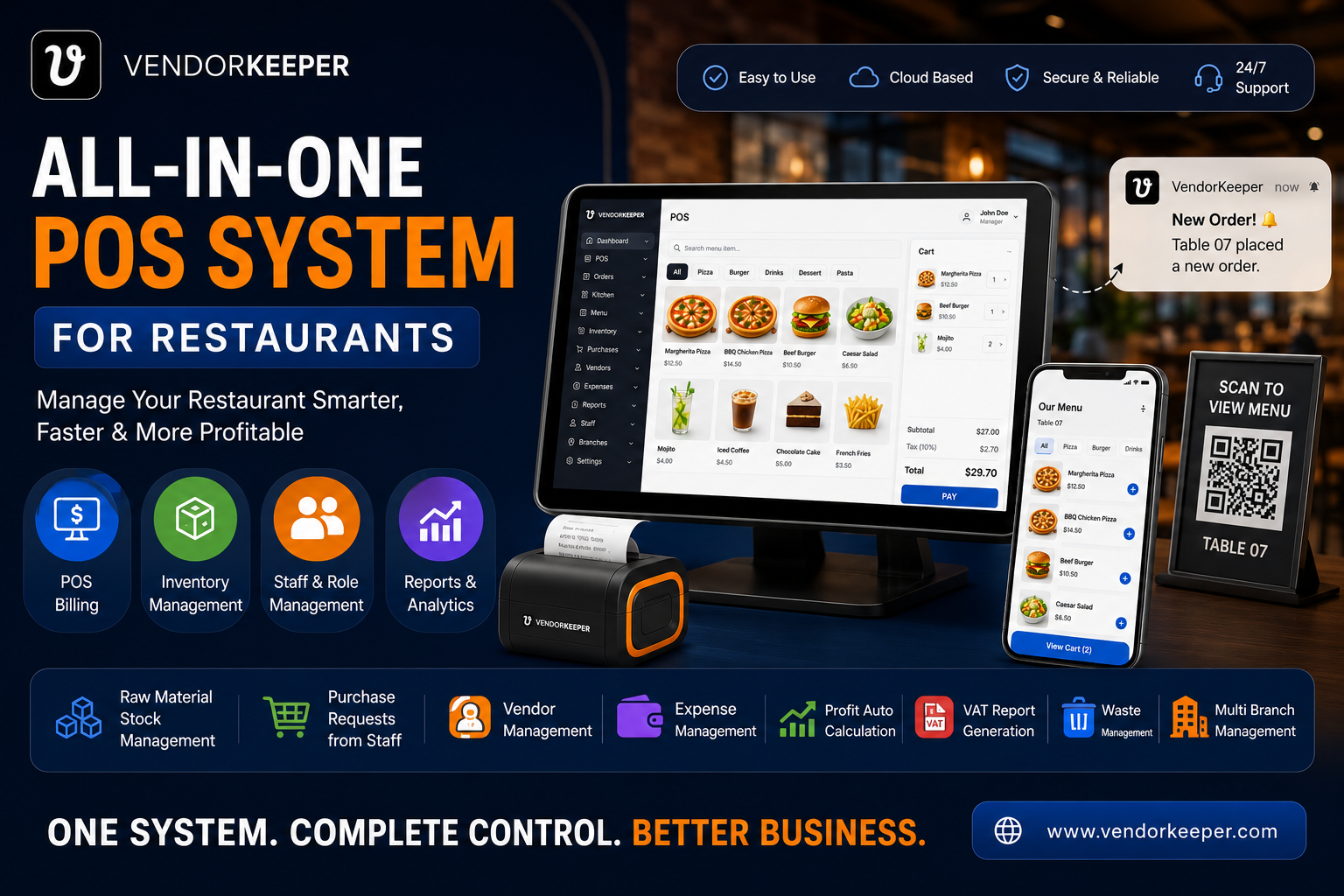
Fine dining is the most demanding segment of the restaurant industry. A tasting menu guest spending $300 per person expects perfection at every touchpoint. This guide covers what the best POS system for fine dining restaurants must do — and how VendorKeeper delivers the operational precision that premium establishments demand.
Why Fine Dining Has Unique POS Requirements
Fine dining operations differ from casual dining fundamentally:
- Multi-course menus with customisations, substitutions, and dietary accommodations
- Course pacing control — each dish fired at the right moment, coordinated between kitchen sections
- High per-cover revenue — a single billing error or miscommunication costs hundreds of dollars and a relationship
- Premium supplier relationships with artisan producers requiring precise ordering and traceability
- Recipe costing precision — margins depend on tracking food cost to the gram
Essential POS Features for Fine Dining
Table-Wise Order Management with Course Control
VendorKeeper's table management module gives front-of-house staff a real-time view of every table — covers, courses ordered, items in progress. Managers can hold or fire a course ("fire mains for Table 7 in 8 minutes") directly from the POS — eliminating walkie-talkie chaos.
Kitchen Display System with Multi-Section Routing
A fine dining kitchen has distinct sections: cold starters, hot mains, cheese, pastry. VendorKeeper's Kitchen Display System routes each dish to the correct station with course sequencing enforced digitally. Every section knows exactly what is coming and when to fire, without a single verbal instruction.
Ingredient-Level Inventory & Recipe Costing
At £40–£80 per portion, fine dining ingredients demand precise tracking. VendorKeeper deducts the exact gram quantity of every ingredient from raw material stock with every dish served — alerting management before premium items run low during service.
Waste & Damage Tracking for Luxury Ingredients
When a $500 jar of caviar is dropped, that loss must be captured immediately. VendorKeeper's waste and damage module logs every incident with item, quantity, cost value, and reason — giving management data to investigate and prevent recurrence.
Vendor & Supplier Management for Artisan Sourcing
VendorKeeper's vendor management module maintains a complete directory of specialist suppliers with purchase history, payment terms, and due reminders. The purchase approval workflow ensures every specialty order is authorised before commitment.
VAT-Compliant Private Dining Billing
Fine dining restaurants host private events with complex billing requirements: split bills, corporate VAT invoices, deferred payment, multi-method settlement. VendorKeeper handles all of these natively in a single transaction.
QR Digital Menu for Fine Dining Storytelling
VendorKeeper's QR menu can include high-resolution dish photography, producer stories, wine pairing suggestions, allergen info, and tasting notes — turning the menu into a rich digital storytelling tool that deepens guest engagement and increases spend on premium add-ons.
Financial Reporting for Fine Dining Operators
VendorKeeper delivers a daily profit snapshot including:
- Gross revenue by service (lunch/dinner/private dining)
- Food cost percentage per menu section
- Waste as a percentage of food cost
- Supplier due payments and cash flow projection
This data — historically requiring a dedicated accountant — is automated and delivered in real time.
FAQs: POS for Fine Dining
What POS system do high-end restaurants use? Leading fine dining establishments are moving from legacy Oracle MICROS and NCR Aloha to modern cloud systems like VendorKeeper that offer real-time analytics, QR menus, and vendor management without six-figure implementation costs.
How does a POS help with fine dining course management? VendorKeeper's kitchen display routes each course to the correct section, allows front-of-house to hold or fire courses, and ensures all sections are synchronised in real time.
Can VendorKeeper handle private dining billing? Yes — split payment, deferred payment, VAT corporate invoicing, and multi-method settlement for private dining and events are all supported.
How does ingredient tracking work in fine dining? Chefs define recipes to the gram. Every dish sold deducts precise quantities from raw material stock — providing real-time food cost calculation and low-stock alerts before service runs out of premium ingredients.