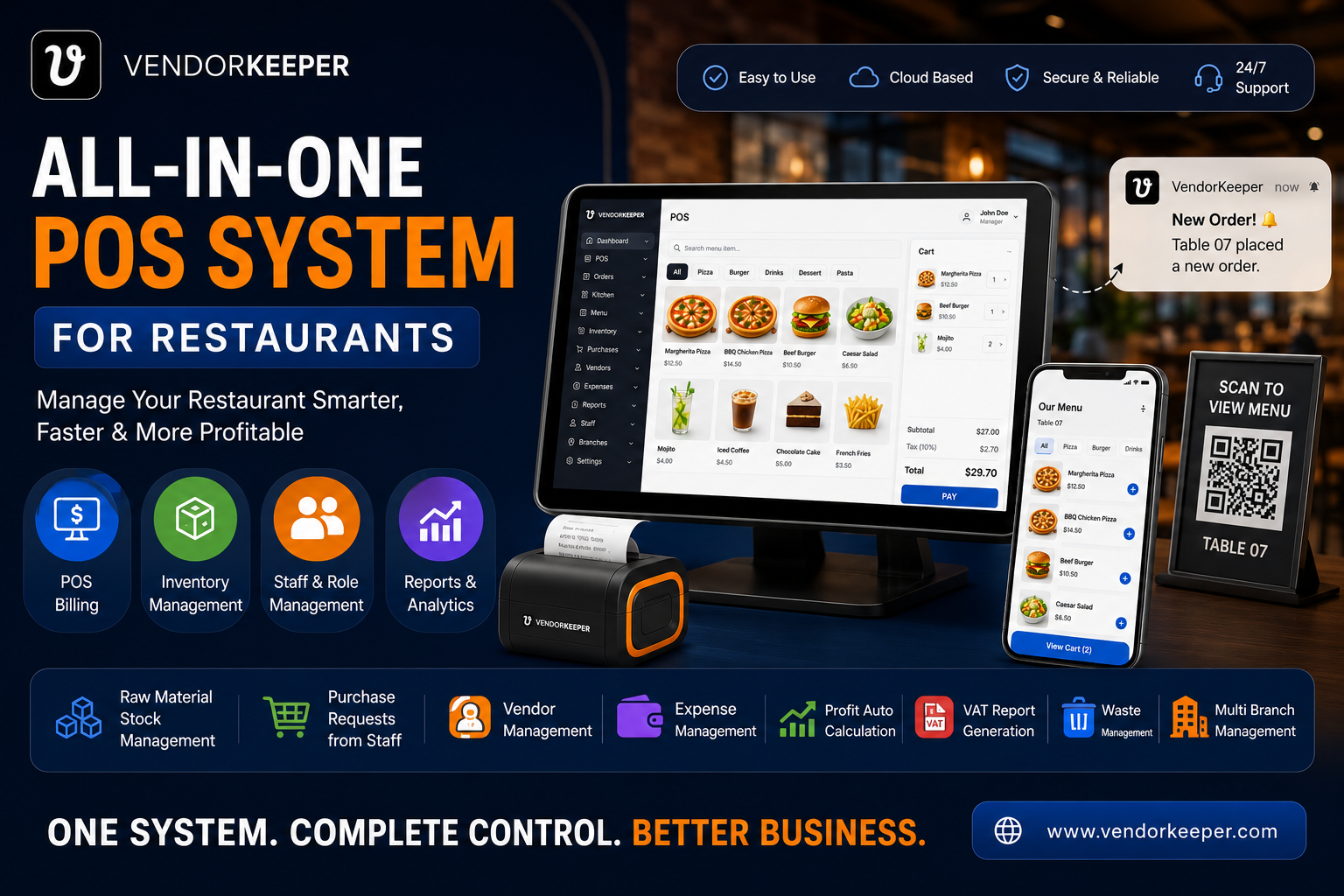
Raw Material Tracking for Bangladesh Restaurants: Stop Losing Money in the Kitchen
Ask any restaurant owner in Dhaka what keeps them up at night and the answer is almost always the same: "I don't know where my stock is going."
The kitchen is the most expensive operating area of a restaurant — and the hardest to control without the right systems. Ingredients disappear faster than sales explain. Month-end stock counts reveal shortfalls that nobody can account for. Your chicken purchase cost is rising but your food cost percentage is rising even faster.
Raw material tracking software eliminates this uncertainty entirely.
The Three Sources of Kitchen Loss
1. Genuine Waste and Spoilage
Fresh ingredients have limited shelf lives. Without tracking, you don't know:
- Which ingredients are consistently spoiling before use
- Whether spoilage rates are increasing (supplier quality issue?)
- Whether the wastage is proportionate to production volume
2. Portion Inconsistency
When one chef serves a 280g chicken portion and another serves 350g for the same menu price, your food cost percentage swings wildly — and your recipes mean nothing.
3. Unauthorized Removal
In a kitchen without tracking, unauthorized consumption or removal of ingredients is nearly impossible to detect. With raw material tracking, every gram of every ingredient is accounted for against every dish sold.
How VendorKeeper Raw Material Tracking Works
Ingredient Database Setup
Create your raw material list in VendorKeeper with unit types:
- Beef (kg)
- Chicken breast (kg)
- Rice (kg)
- Cooking oil (liter)
- Eggs (piece)
- Spice mixes (gram)
Each ingredient has a purchase price that updates when you record new supplier deliveries.
Recipe-Level Ingredient Assignment
For every menu item, define the exact ingredient recipe:
- Chicken Biriyani: 350g chicken, 200g rice, 30g spice, 20ml oil, 1 egg
- Beef Burger: 200g beef, 1 bun, 2 cheese slices, 30g lettuce, 20g sauce
This is done once in setup. After that, it runs automatically forever.
Automatic Deduction on Sale
When your cashier sells 1 Chicken Biriyani:
- VendorKeeper deducts 350g chicken from your chicken stock
- Deducts 200g rice from your rice stock
- Deducts all other recipe ingredients proportionally
No staff action required. The kitchen never needs to manually record anything.
Variance Detection: Theory vs. Actual
At any time, you can compare:
- Theoretical stock: What should be remaining based on sales
- Actual stock: Physical count
The gap between these numbers is your variance — and it's the most important management metric in your kitchen. Large variance = problem to investigate.
Recording Wastage Correctly
When you throw out 2kg of tomatoes that have spoiled, a kitchen staff member records this in VendorKeeper's Wastage Log:
- Ingredient: Tomatoes
- Quantity: 2,000g
- Reason: Spoilage
- Date/Time: Automatic
This wastage is deducted from your stock and tracked separately from sales-based deductions. Month-end reports show your wastage rate as a percentage of purchases — a powerful quality control metric.
The Daily Market List
VendorKeeper generates a Daily Purchase List each morning based on:
- Current raw material stock levels
- Yesterday's usage rates (from auto-deductions)
- Your configured safety stock thresholds per ingredient
Your procurement person goes to the market with a precise list — no more buying based on memory or overbuying "just in case."
Real Impact: A Gulshan Restaurant After 60 Days
A casual dining restaurant in Gulshan tracked the following improvements after implementing VendorKeeper raw material tracking:
- Chicken usage variance: Reduced from 15% unexplained to under 2%
- Wastage identification: Discovered mangoes were consistently spoiling (supplier switch resolved this)
- Purchasing cost reduction: 18% reduction in monthly ingredient procurement by eliminating panic buying
Call Now: +8801866541002 — Get your restaurant's raw material database set up in one session with our team.